Speaker Series
[On Demand] Educational Speaker Program
Note: Continuing education (CE) credits are no longer available on recorded programs.
Parkinson’s Disease (PD) and its Effects on the GI Tract
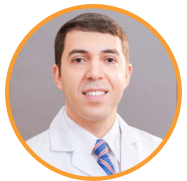
Presented by Jonathan Myers, MD | Medical Director of Rehabilitation
Objectives:
- Recognize the motor and non-motor signs and symptoms of Parkinson’s disease, including early prodromal indicators.
- Understand how Parkinson’s disease affects the gastrointestinal tract and contributes to chronic constipation.
- Identify the clinical consequences of untreated constipation and its impact on patient health, function, and quality of life.
- Learn how to assess bowel function using the Bristol Stool Chart and other clinical assessment tools.
- Review evidence-based approaches for managing constipation, including lifestyle modifications, pharmacologic therapies, and individualized bowel care programs.
- Explore practical strategies to help improve bowel predictability and support better outcomes for patients living with Parkinson’s disease.
Who should attend:
- Rehabilitation Nurses
- Neurology Nurses
- Nurse Practitioners and Physician Assistants
- Physical Medicine & Rehabilitation Physicians
- Neurologists
- Occupational Therapists
- Physical Therapists
- Speech-Language Pathologists
- Case Managers
- Rehabilitation Leaders and Educators
- Long-Term Care Clinicians and Home Health Professionals
Caring for Patients with Hemorrhoids: From the General Population to SCI
Presented by Robert Cutler, MD | Board-Certified Proctologist
Objectives:
- Participants will gain a practical, clinically relevant understanding of hemorrhoidal disease across patient populations, including spinal cord injury (SCI).
- Understand the prevalence and risk factors of hemorrhoids, including why patients with SCI are at increased risk
- Differentiate the four types of hemorrhoids and recognize key symptoms such as bleeding, pain, soiling, prolapse, and thrombosis
- Evaluate symptom severity vs. clinical grading and recognize patterns of underreporting
- Compare hemorrhoidal disease in the general population vs. SCI patients
- Review evidence-based management approaches, including conservative care and when procedural intervention may be required
- Apply clinical pearls to improve patient comfort, outcomes, and quality of life
ALS – Dysregulation of Gut Microbiota and Bowel Problems
Presented by Jonathan Myers, MD | Medical Director of Rehabilitation Services
Objectives:
- Describe the underlying pathophysiology of amyotrophic lateral sclerosis (ALS) and its associated clinical signs and symptoms.
- Review the epidemiology of ALS, including known environmental exposures and risk factors.
- Explain the role of gut microbiota dysregulation and neuron-toxic molecules in ALS disease progression.
- Identify common gastrointestinal symptoms and bowel dysfunction observed in individuals with ALS.
- Discuss evidence-informed strategies for the assessment and management of constipation in patients with ALS.
Prevention and Care for Incontinence-Associated Dermatitis (IAD)
Presented by Robert Cutler, MD | Board-Certified Proctologist
Objectives:
- Aging and Pathology of IAD – Learn how aging impacts skin integrity and the biological processes behind IAD. Takeaway: Older adults require proactive, evidence-based care to reduce skin breakdown.
- Prevalence and Risk Factors – Understand how common IAD is and the factors that contribute to its development. Takeaway: Early identification and addressing risks holistically improves outcomes.
- Body Positioning and Nutrition – Explore the role of positioning and nutrition in maintaining skin health and supporting recovery. Takeaway: Proper positioning and adequate nutrition are vital for healing and prevention.
- Prevention and Daily Care – Review best practices for IAD prevention, including cleansing, moisturizing, and routine skin care. Takeaway: Consistent, gentle daily care reduces complications and maintains skin integrity.
- Barrier Products and Treatment – Learn about commonly used barrier products and their correct application. Takeaway: Selecting and applying the right barrier enhances protection and patient comfort.
Post-Stroke: Constipation and Incontinence
Presented by Jonathan Myers, MD | Medical Director of Rehabilitation, St. Lukes Magic Valley Medical Center, ID
Objectives:
- Stroke overview: Understand the epidemiology and impact of ischemic and hemorrhagic stroke.
- Bowel health in stroke: Learn how the brain-gut axis contributes to constipation and incontinence.
- Clinical tools: Apply the Bristol Stool Chart and nursing care plans to improve outcomes.
- Targeted care: Explore evidence-based bowel interventions, including ENEMEEZ®.
- Quality of life: Support recovery by reducing complications and enhancing patient comfort.
Neurogenic Bowel in Brain Injury
Presented by Cindy Ivanhoe, MD | Director of Spasticity and Associated Syndromes of Movement, TIRR Memorial Hermann
Objectives:
- Why bowel management is important in the brain injury patient
- Bowel management in the brain injury survivor in the acute rehabilitation setting
- Long-term complications of inadequate bowel management
- Bowel management considerations in the chronic brain injury patient