

Dry Mouth After Radiation Therapy: What Cancer Patients Should Know
Radiation therapy is one of the commonly prescribed treatments for cancer. It can be highly effective, helping to control or eliminate cancer and giving many people a renewed chance at life. However, like many cancer treatments, radiation therapy can also take a significant toll on the body. And even after the treatment comes to an end, some side effects can linger long afterwards. One of those side effects is dry mouth, particularly among people who receive radiation therapy for head and neck cancers.
Known medically as xerostomia, dry mouth occurs when the salivary glands do not produce enough saliva to keep the mouth comfortably moist. Saliva plays an important role in everyday life, helping us chew and swallow food, speak clearly, enjoy flavours, protect our teeth and gums, and maintain a healthy mouth. When saliva production is reduced, familiar daily activities can become challenging.
For people undergoing radiation therapy for head and neck cancer, the salivary glands are often close to the treatment area, making them particularly vulnerable to radiation damage. As a result, dry mouth can persist long after treatment has finished, affecting everything from mealtimes and speaking to sleep and social interactions. Understanding why it happens and knowing how to manage it can make a meaningful difference to quality of life during and after cancer treatment.
Why Does Radiation Therapy Cause Dry Mouth?
Radiation therapy works by destroying cancer cells, but healthy tissues located within the treatment area can also be affected. When radiation is directed near the salivary glands, these glands may become damaged and produce less saliva than before. The major salivary glands are located around the cheeks, beneath the jaw and under the tongue. Because of their location, they often fall within the radiation field when treating cancers of the head and neck.
During radiation treatment, some people notice that their saliva becomes thicker or stickier, while others experience a significant reduction in saliva production altogether. Although some recovery may occur over time, dry mouth can persist for months or even years after treatment, particularly when higher radiation doses are delivered to the salivary glands. The severity of symptoms varies from person to person and depends on factors such as the radiation dose, the exact treatment area and whether radiation is combined with chemotherapy or other therapies.
Which Cancers Are Most Commonly Associated with Radiation-Induced Dry Mouth?
Dry mouth is most commonly linked to radiation therapy for head and neck cancers, where the salivary glands are often located close to the treatment site. It’s important to note that the risk depends less on the type of cancer itself and more on where radiation is delivered. Radiation therapy to other parts of the body does not usually cause dry mouth directly because the salivary glands are outside the treatment field. However, certain chemotherapy drugs, targeted therapies and medications used during cancer treatment can also contribute to dry mouth.
How Dry Mouth Affects Daily Life
Many people that haven’t experienced the persistent and frustrating feeling of not being able to swallow their food without sipping water for assistance can assume a dry mouth simply means feeling thirsty. In reality, reduced saliva can affect almost every aspect of daily life.
People living with radiation-induced dry mouth may experience a variety of uncomfortable situations in result of their dry mouth such as:
- Difficulty chewing and swallowing, particularly dry foods
- Changes in taste or reduced enjoyment of meals
- Needing to sip water frequently while eating or speaking
- Thick or sticky saliva
- Difficulty speaking for extended periods
- Waking up repeatedly during the night because of a dry mouth
- Persistent bad breath
- Increased risk of tooth decay, gum disease and oral infections
These challenges can make everyday routines exhausting. A simple meal with family may require careful planning. Long conversations can become uncomfortable. Some people begin avoiding restaurants or social events because eating in public feels difficult or embarrassing.
For many cancer survivors, ongoing side effects can serve as a daily reminder of treatment long after appointments have ended. Frustration, self-consciousness and fatigue are common, especially when symptoms interfere with activities that once felt effortless. Every person’s experience is different. Some notice gradual improvement over time, while others learn to adapt to longer-term changes. Acknowledging these experiences is an important part of survivorship, as recovery also means learning to navigate the lasting effects of treatment.
Dry Mouth Isn’t Limited to Radiation Therapy
It’s worth noting that radiation is not the only cancer treatment that can affect saliva production. Some chemotherapy drugs, targeted therapies and supportive medications may also contribute to dry mouth, either temporarily or for longer periods. For example, certain targeted cancer therapies list dry mouth as a possible side effect. If you notice persistent dryness during treatment, it’s important to let your healthcare team know so they can help identify the cause and recommend appropriate management strategies.
Managing Dry Mouth During and After Treatment
Although there is no single solution that works for everyone, many people find that a combination of strategies helps improve comfort and protect their oral health.
- Stay hydrated
Keeping water nearby throughout the day and taking frequent small sips can help relieve dryness, particularly during meals and conversations.
- Maintain good oral hygiene
Because saliva helps protect the teeth, people with dry mouth are at greater risk of cavities and other oral health problems. Brushing with fluoride toothpaste, flossing regularly and attending routine dental appointments become even more important during and after treatment.
If you’re struggling to eat enough, try having several small, nutrient-dense meals and snacks throughout the day instead of relying on three larger meals. Eating at regular intervals, rather than waiting until you feel hungry, can help ensure your body receives the nourishment it needs to support recovery and maintain energy levels.
- Try products designed for dry mouth
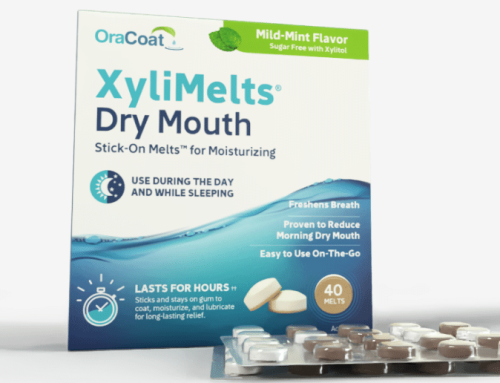
Products designed to provide longer-lasting moisture may offer additional relief. In a recent clinical trial, people with radiation-induced xerostomia reported significantly greater relief from dry mouth symptoms and better sleep continuity when using xylitol-containing mucoadhesive discs (XyliMelts) than when drinking water. The discs were also associated with improved sleep continuity and a greater willingness to continue using them.This suggests that while these products may not restore saliva production, they can still help make persistent dry mouth more manageable.
Research suggests that both acupuncture and, to a lesser extent, acupressure may help stimulate saliva production and relieve symptoms of dry mouth in some people following cancer treatment. While results have been encouraging, these therapies are best viewed as complementary approaches and should be discussed with your healthcare team before starting.
You Don’t Have to Navigate It Alone
Living with dry mouth can sometimes feel isolating, especially when it affects everyday moments that others rarely think about. But support is available. Alongside guidance from your healthcare team, hearing from others who have experienced similar challenges can provide reassurance, practical ideas and a reminder that you are not alone. Every cancer journey is different, and sharing lived experiences can help others feel better prepared for life during and after treatment.
Whether you’re currently undergoing radiation therapy or adjusting to life after treatment, recognizing dry mouth as a significant part of survivorship is the first step towards managing it with confidence. With the right support, practical strategies and appropriate oral care, it is possible to reduce discomfort and continue enjoying the moments that matter most.
This article was created in collaboration with Our Cancer Stories and is intended for educational purposes.
Writer: Polya Genova
Bibliography:
Gu, W., Dong, H., Yuan, Y., Yuan, Z., Jiang, X., Qian, Y., & Shen, Z. (2025). Is Acupuncture an Effective Treatment for Radiation-Induced Xerostomia of Patients with Head and Neck Cancer? A Systematic Review and Meta-Analysis. Journal of integrative and complementary medicine, 31(5), 431–444. https://doi.org/10.1089/jicm.2023.0781
Dirix, P., Nuyts, S., & Van den Bogaert, W. (2006). Radiation-induced xerostomia in patients with head and neck cancer. Cancer, 107(11), 2525–2534. https://doi.org/10.1002/cncr.22302
Mercadante, V., Jensen, S. B., Smith, D. K., Bohlke, K., Bauman, J., Brennan, M. T., Coppes, R. P., Jessen, N., Malhotra, N. K., Murphy, B., Rosenthal, D. I., Vissink, A., Wu, J., Saunders, D. P., & Peterson, D. E. (2021). Salivary Gland Hypofunction and/or Xerostomia Induced by Nonsurgical Cancer Therapies: ISOO/MASCC/ASCO Guideline. Journal of clinical oncology : official journal of the American Society of Clinical Oncology, 39(25), 2825–2843. https://doi.org/10.1200/JCO.21.01208
Schoppmeier, C. M., Zimmer, S., Meyer-Hofmann, A. M., Ludwig, E., & Barbe, A. G. (2026). Efficacy of adhesive discs for nocturnal xerostomia after head and neck radiotherapy: A randomized crossover trial. Clinical Oral Investigations, 30(3), 101.
Talha, B., & Swarnkar, S. A. (2023). Xerostomia. In StatPearls. StatPearls Publishing. https://www.ncbi.nlm.nih.gov/books/NBK545287/
![[Webinar] Parkinson’s Disease (PD) and its Effects on the GI Tract](https://www.questhealthcare.net/wp-content/uploads/2026/08/926-Quest-Healthcare-Speaker-Session-LinkedIn-Graphic-1-500x383.png)
![[Webinar] Caring for Patients with Hemorrhoids: From the General Population to SCI](https://www.questhealthcare.net/wp-content/uploads/2026/04/Quest-SS-March-2026-Linkedin-graphic-2-500x383.png)
![[Webinar] ALS – Dysregulation of Gut Microbiota and Bowel Problems](https://www.questhealthcare.net/wp-content/uploads/2026/02/Quest-SS-March-2026-Linkedin-graphic--500x383.png)